


There was a time when a spy story moved like a bullet—fast, loud, and certain of its aim. In films like Goldfinger, the world was simple: villains were obvious, heroes unshaken, and truth arrived neatly before the credits rolled.
That world is gone.
What remains is something slower… and far more honest.
Modern stories lean into realistic tradecraft, psychological weight, and the quiet understanding that loyalty is often a mask worn until it no longer fits. The sharp-edged certainty of early James Bond film series entries has given way to something murkier—more human, more fallible.
The spy is no longer a weapon.
He’s a question.
What We’re Watching Now
Television has become the proving ground.
Series like Mr. & Mrs. Smith explore the fragile architecture of trust, where love and deception share the same bed. Slow Horses strips away glamour entirely, offering a world of discarded operatives who, despite their flaws, see more clearly than those still in power.
Meanwhile, The Night Agent drives forward with relentless urgency, each episode revealing another layer of conspiracy, while Spy/Master lingers in paranoia, where every ally feels temporary.
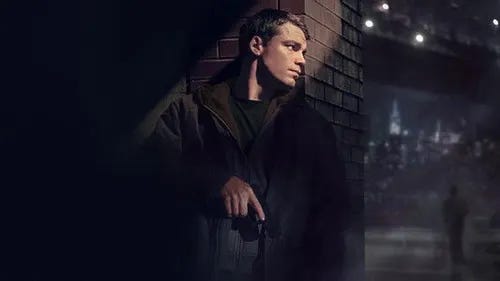
Even works like The Night Manager remind us that tension, when done right, doesn’t age—it deepens.
What binds these stories together is patience. They let the truth surface slowly, like something long buried.
The Big Screen Still Burns
Cinema hasn’t lost its place—it’s simply changed its rhythm.
Films like Black Bag and Inheritance embrace layered storytelling, where betrayal is expected, not shocking. Relay reaches backward, echoing the shadow-heavy paranoia of 1970s thrillers.
And yet, for all the evolution, some series still hold their ground.
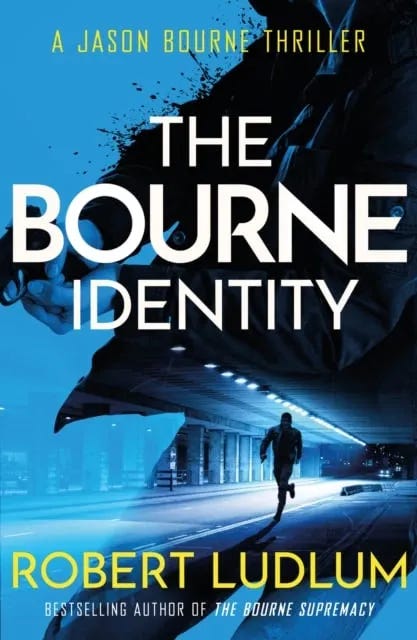
The Bourne film series remains a personal cornerstone and my personal favorite—gritty, grounded, and driven by identity rather than spectacle. There’s something enduring about watching a man piece himself together while the world tries to tear him apart.
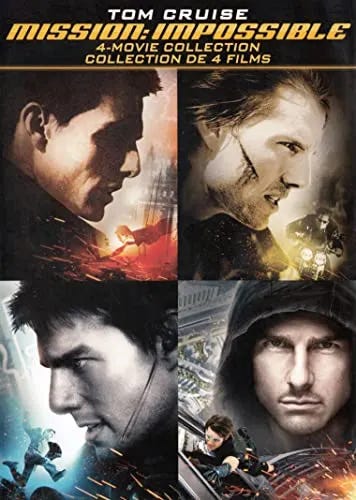
At the same time, the Mission: Impossible film series films continue to deliver a different kind of thrill. Maybe it’s the presence of Tom Cruise, or maybe it’s the sheer joy of the gadgets, the scale, the impossible made believable for just long enough. They remind us that espionage can still be fun—even when it dances along the edge of chaos.
What We’re Reading
On the page, the shift is just as clear.
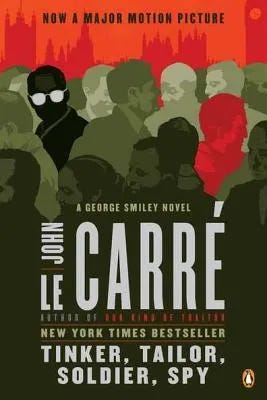
I recently spent time with Tinker Tailor Soldier Spy by John le Carré, and it lingers. Not because of action—but because of its silence. Its patience. Its refusal to hand you the truth without making you work for it.
That’s the direction the genre is moving.
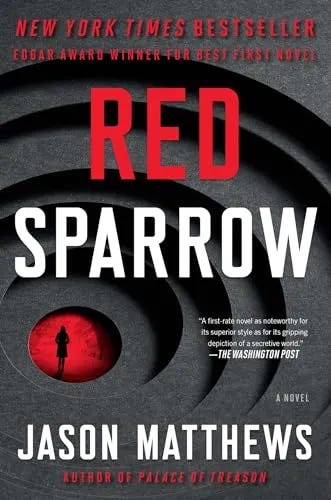
And waiting on the horizon for me to dive into is the Red Sparrow Trilogy by Jason Matthews. There’s a certain anticipation there—the hope that it lives up to its reputation, that it delivers not just intrigue, but weight.
A Shift in Taste
The truth is this:
The best espionage stories today are no longer about saving the world.
They’re about surviving it.
They ask what it costs to live a life built on secrets.
They ask who you become when the mission ends… if it ever does.
A Question for You
I find myself drawn to the long road—the slow unraveling. A series that takes its time, that lets each episode reveal just enough to keep you leaning forward, waiting for the next fracture in the lie.
A film can ignite.
But a series can endure.
Still, there’s something to be said for both—the raw identity struggle of Bourne, the high-wire spectacle of Mission: Impossible, the quiet tension of le Carré.
So where do you stand?
Do you prefer the contained fire of a single film—clean, sharp, complete?
Or the drawn-out descent of a series, where truth arrives in fragments and nothing is ever certain?
Because in this world of shadows and shifting loyalties, the real question isn’t who the spy is.
It’s how long you’re willing to follow them… before you realize you’ve become part of the story yourself.